No organ is offered through BIOBRIDGE. This testimony documents a response to the artwork.
Country: Denmark
Testimony: Healthy young man 42 years old.
The Price of Life — an art project by Marco Evaristti
An art project about the market which we pretend does not exist. Ten chapters & one connection which cannot be ignored.
New! Biobridge now collects testimonies from people who have considered buying or selling an organ! Enter here!
 BIOBRIDGE — The Price of Life
Denmark is facing a shortage of organs.
At the end of 2025, approximately 393 people were on the waiting list for a transplant. Around 330 were waiting for a kidney, while others needed a liver, a heart, or new lungs. At least 17 Danes died that year while still waiting for another person's death to extend their own life.
At the same time, more transplants were performed in Denmark than ever before. The system is trying to keep up. Technology is improving. Legislation is expanding. Yet demand continues to grow faster than the number of available organs.
This is where BIOBRIDGE begins.
Far from the operating room and the sterile corridors of the hospital, but directly in the middle of a question of value:
What is a human life actually worth when survival depends on another person's organs?
We live in a society that publicly condemns the trade in human organs, while the global shortage of organs has already created parallel markets in countries such as Pakistan, India, Egypt, and the Philippines.
There is no official price for a kidney because the trade is illegal, yet everyone knows the market exists.
Research and investigative journalism repeatedly describe the same pattern:
A poor donor may receive between 1,000 and 5,000 US dollars, while clinics, brokers, and intermediaries earn significantly larger sums. For the recipient, the total cost may reach between 50,000 and 150,000 dollars.
And some Danes do it.
Some travel abroad and obtain transplants through systems they know are illegal. They return home with a new organ inside their bodies and are subsequently treated within the Danish healthcare system, even when everyone understands that the organ's origin most likely lies in poverty, debt, or desperation.
The system condemns the act, but absorbs the result, hospitals treat the organ, medical records continue.
Life moves on, documents become neutral, language becomes administrative. “Donor unknown.”
It is this double standard that BIOBRIDGE attempts to place in the center of the room.
I therefore began thinking about my own kidney, my liver, and my blood as something strange.
As something the world already treats as a form of value, but only in secret.
The body has already become a currency.
The only difference is who is allowed to say it out loud.
BIOBRIDGE therefore imagines a system in which people can voluntarily register through a platform and declare:
I Sell — I Buy.
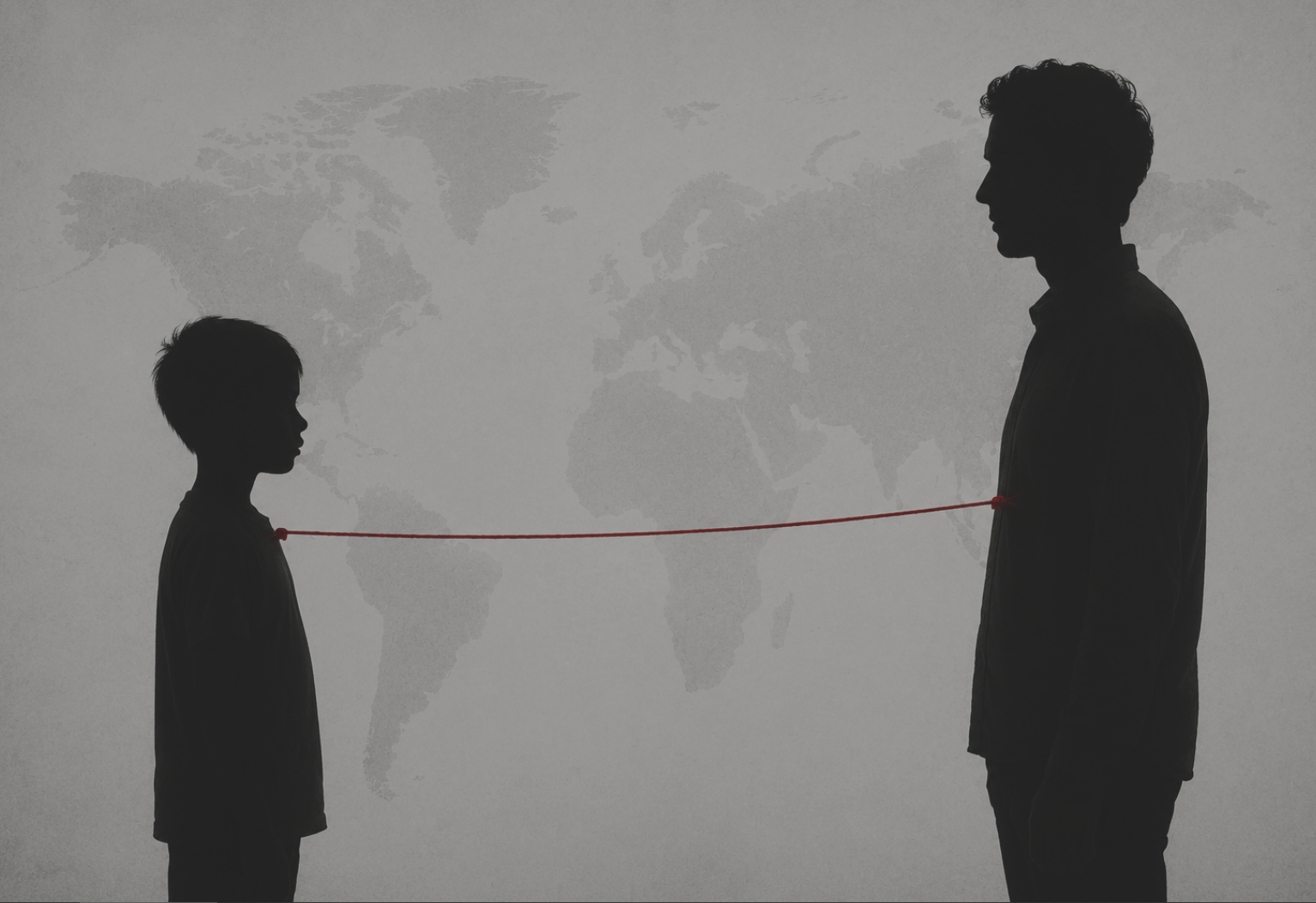
A child in a poorer part of the world could receive financial support for schooling, food, healthcare, and education over many years. Not as charity. But as a visible connection between privilege and survival.
If, later in life, the sponsor found themselves in a situation where an organ became necessary to survive, a question would emerge with brutal clarity:
Who actually owes whom life?
This is precisely where the work becomes uncomfortable. Because suddenly the organ ceases to be merely medicine.
It becomes history, debt, love, power, poverty, hope, and global inequality gathered into a single system.
The Western world loves the narrative of pure donation, voluntary action, and ethical transplantation.
Yet our prosperity is already built upon global connections in which the labor, resources, and lives of poorer people sustain our systems every single day. BIOBRIDGE merely attempts to make that connection visible. The project is not about creating a new market for organs.
The market already exists.
Rather, the project asks why we accept the system as long as it remains hidden behind the neutral language of hospitals, documents stamped “origin unknown,” and a collective decision not to look directly at the relationship between our needs and the desperation of others.
Perhaps the most frightening thing is not the thought of selling an organ. Perhaps it is the realization that the world placed a price on human life long before we dared to say it out loud ourselves.
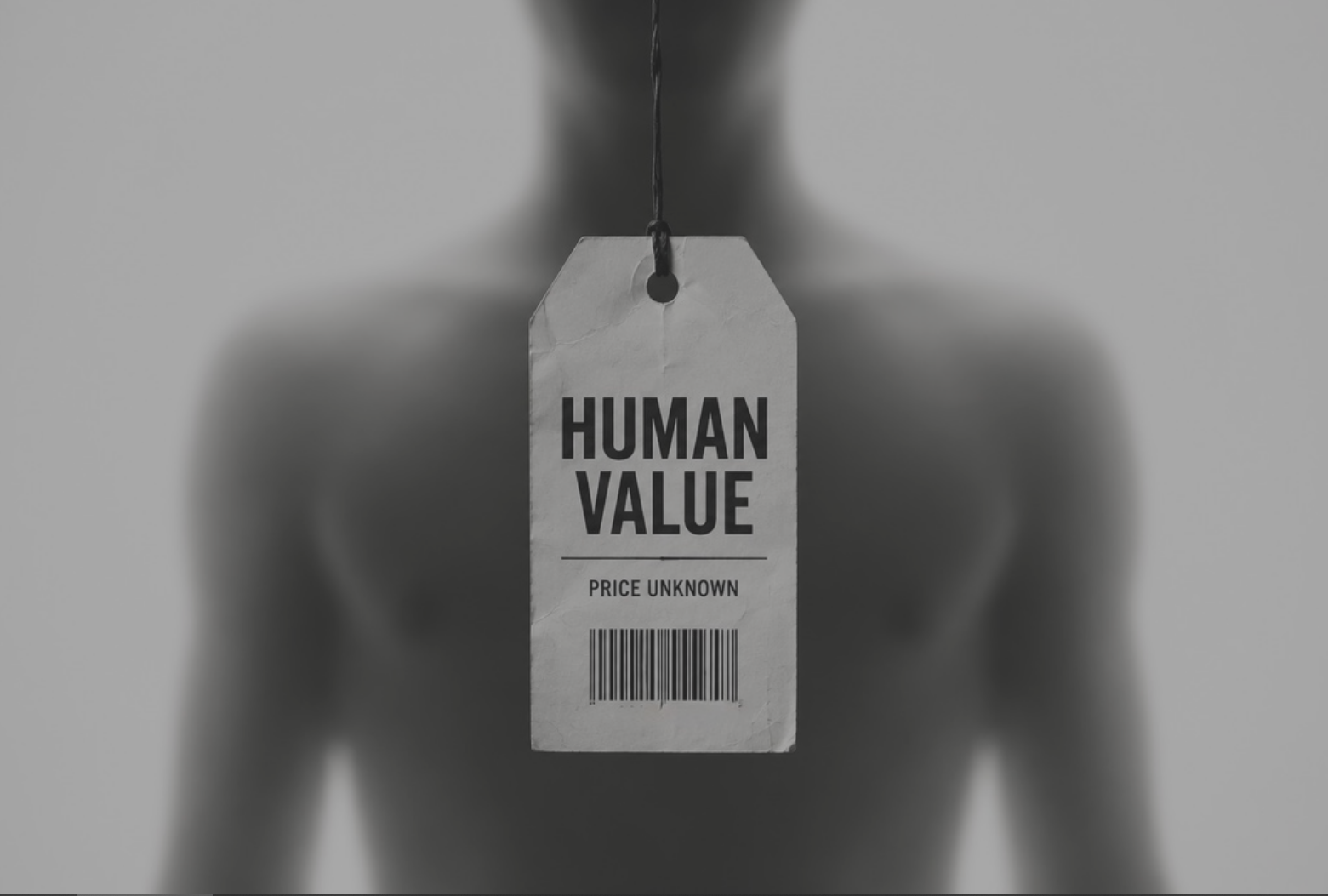
We say that the human body is not for sale, we say it with great certainty.
It is written into international conventions. It is written into legislation. It is written into the ethical guidelines of hospitals.
Human organs must not be bought or sold. Period.
It is one of the few moral principles on which almost everyone seems to agree. A human being must never be reduced to spare parts, a life must never be converted into a price, an organ must never become a commodity, but why is this statement repeated so often?
Perhaps because reality is far less simple.
For while the world condemns organ trafficking, the world also knows that it exists. In countries such as Pakistan, India, Egypt, and the Philippines, documented cases have emerged for decades in which poor people have sold a kidney to repay debt, buy food, or secure the survival of their children.
There are no official market prices, yet markets exist, there are no official sellers but buyers exist. There is no official industry, yet brokers, clinics, and networks continue to operate.
We condemn the market, yet we accept its existence, we condemn the transaction, yet we live with its consequences.
Perhaps this is precisely why the subject feels so uncomfortable. Because it challenges the story we most want to believe. The story that ethics and reality always move together.
That legislation automatically creates justice. That prohibition automatically makes a market disappear.
BIOBRIDGE does not ask whether organ trade is right or wrong. BIOBRIDGE asks: What happens when prohibition meets desperation? when a dying patient encounters a system without organs? when poverty meets demand? when survival becomes more important than morality? Maybe the real story is not found in the law, perhaps it is found in the distance between the law and reality.
That distance is where BIOBRIDGE begins to dig, not to defend the market, not to condemn the market, but to make it visible.
Because what we refuse to see does not cease to exist, it simply becomes easier to ignore.
We prohibit the market. But desperation remains. We say that the human body is not for sale. Yet everyone knows there is a price.
We say that the human body is not for sale, yet the market already knows its price.
There is a story that is rarely told.
Not because it is secret, but because it is uncomfortable, it begins with two people who never meet.
One sits in a hospital, the other may sit in a house without running water. One fears death, the other fears poverty.
One needs an organ, the other needs money.
There is no official connection between them, no contract, no recognized relationship, no public conversation.
And yet they are already connected.
One lacks what the other possesses, the other lacks what the first possesses. This is where the hidden connection emerges, not through medicine, neither through ethics, but through necessity.
We prefer to speak of transplantation as a story of generosity.
A donor, a recipient, a gift, a life saved.
But beyond this narrative, another reality exists. A reality in which poverty, debt, illness, and privilege constantly intersect, a reality in which global inequality already connects people across continents.
Every day, in our phones, in our clothes, in our food, in our energy, in our economies. We accept these connections as natural.
BIOBRIDGE asks why the connection becomes unacceptable the moment it involves the human body.
Why does it become visible there? why does it become morally intolerable precisely there?
Perhaps because the body is the last place where we still wish to believe in the idea of complete human equality, but reality is rarely equal.
Some people are born with access to advanced hospitals, others are born far from them. Some people can wait for a transplant, others cannot wait for their next meal.
Some people have insurance, others have debt. Some people possess time, others sell it.
BIOBRIDGE does not seek to create this connection.
It already exists.
The project merely attempts to make it visible, to bring it out of the shadows.
To place it in the center of the room. For maybe the greatest illusion is not that organ trafficking exists.
Perhaps the greatest illusion is that our lives are not already connected to the deprivation of others. In the hospital it is called a transplant, in economics it is called a transaction, in art it becomes a question: At what point does one person's survival begin to depend on another person's desperation?
And if the connection already exists, who bears the responsibility of seeing it?
"DONOR UNKNOWN."
Two words, an administrative expression, a neutral stamp. Yet behind those two words may lie an entire story.
A family, a choice, a sacrifice, a debt, a life.
BIOBRIDGE begins where language ends. Where “unknown” is no longer an answer.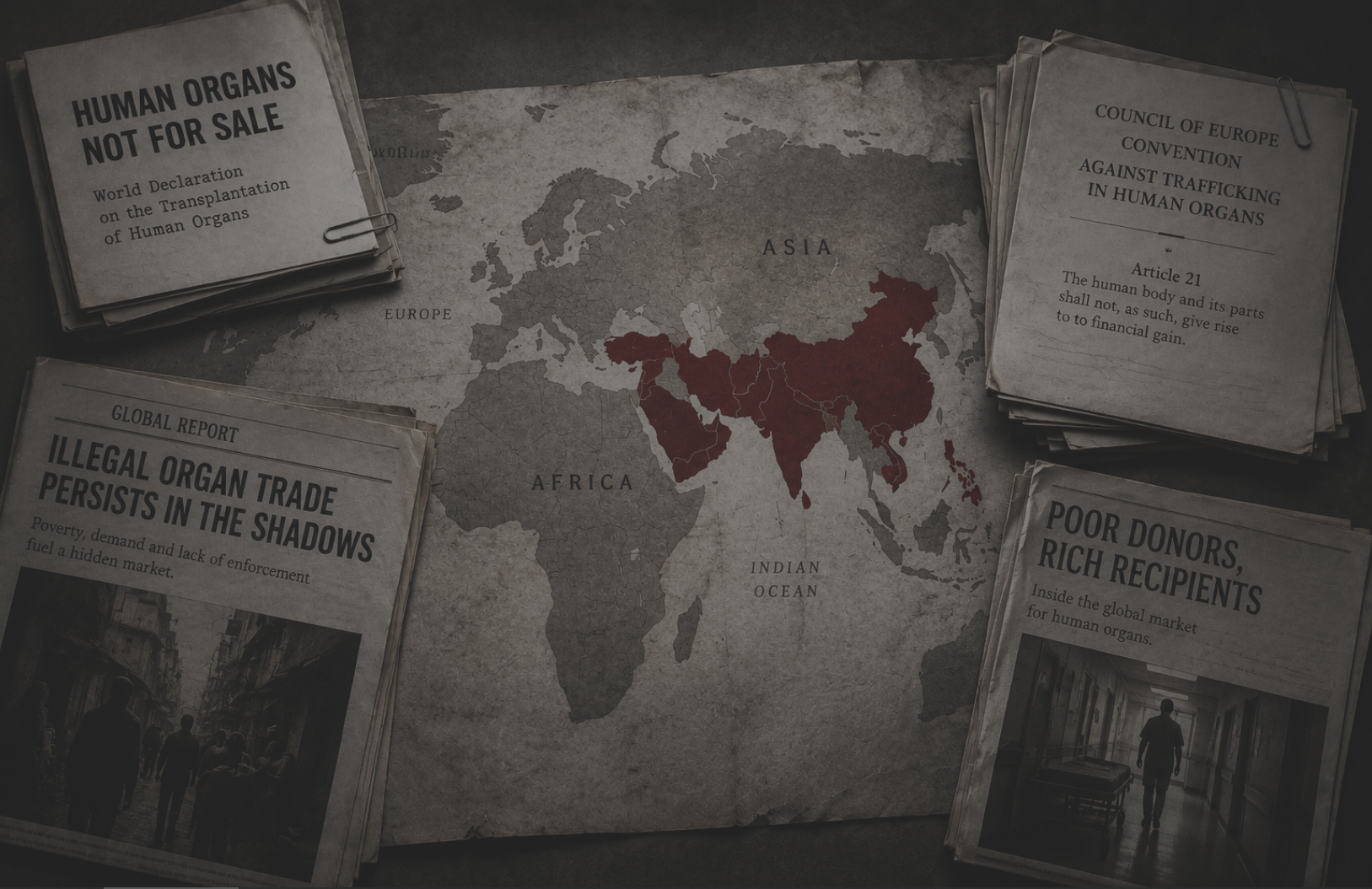
I began to think about my own kidney.
My liver, my blood, not as organs, but as value, it felt wrong.
Perhaps because we are raised to believe that the human body exists outside the economy. That the body is sacred, that it cannot be priced.
Yet the world around us tells a different story.
Everywhere, human time, labor, knowledge, and physical abilities are converted into economic value.
We sell hours, we sell experience, we sell strength, we sell our lives in small portions every single day.
Why does the boundary become so absolute when we talk about organs?
Maybe because the organ is the last part of ourselves that we wish to keep outside the market.
The final boundary between the human being and the commodity. But what happens when another person's survival depends on that very organ? What happens when desperation meets desperation?
When one person lacks an organ in order to survive, while another lacks money in order to live?
BIOBRIDGE does not attempt to answer the question. The project asks it.
For perhaps the most uncomfortable thing is not the thought of selling an organ. Maybe it is the realization that the world has already placed a price on human life.
The only difference is that we prefer not to talk about it.
VALUE
When does an organ become a commodity? When does help become debt?
When does donation become investment? And who gets to decide the difference?
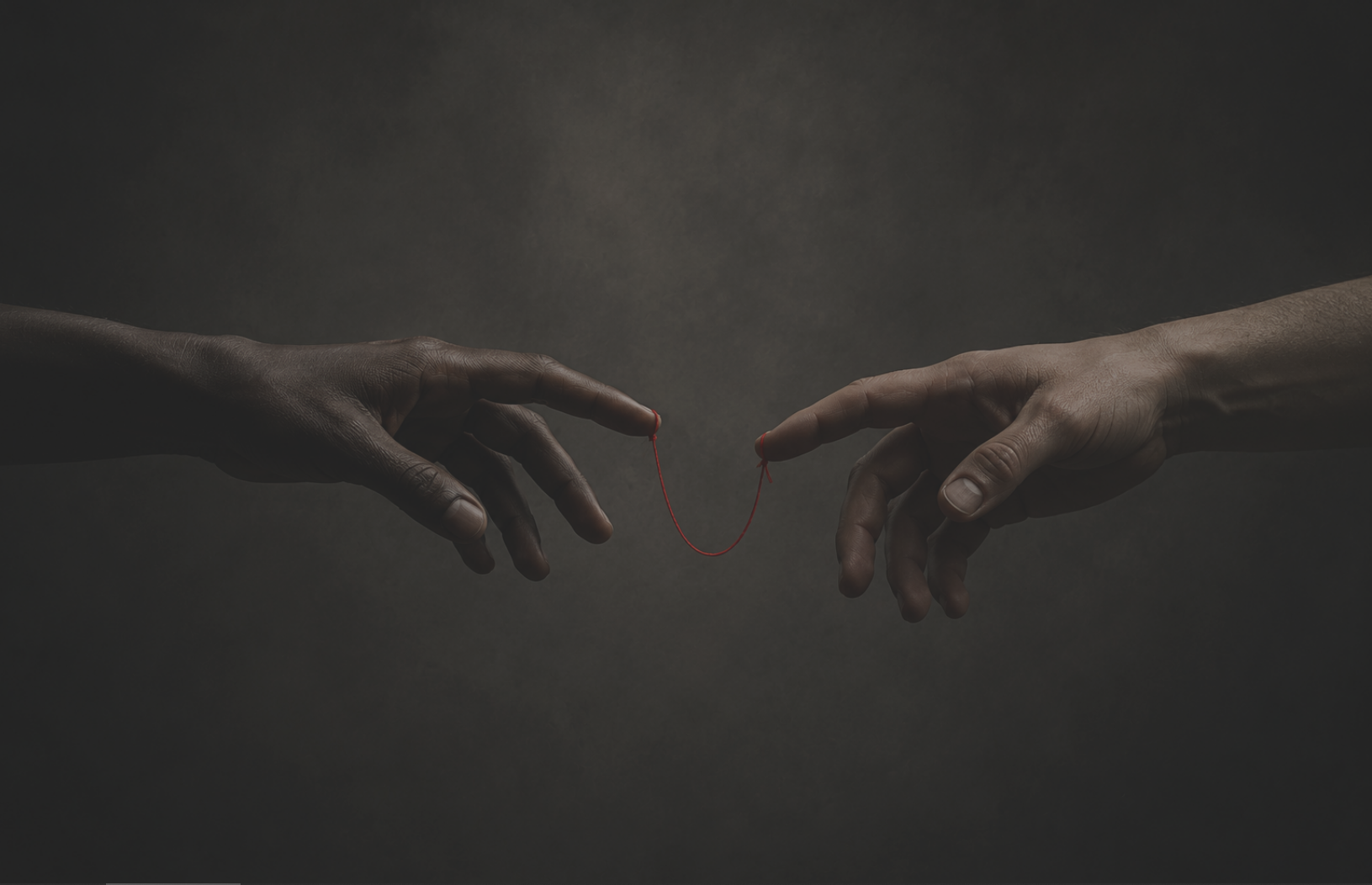 BIOBRIDGE imagines a system.
Not as a solution, not as a proposal, but as a question.
A child in a poorer part of the world receives support over many years. Schooling, healthcare, food, education.
Not as charity, but as a visible connection between two human lives. Years later, a situation arises.
The sponsor needs an organ in order to survive, the child is now an adult, compatible. And a question emerges:
Who actually owes whom life? is the organ a gift? a payment? an investment? A debt? Or something else entirely?
BIOBRIDGE does not attempt to answer the question.
The project simply explores what happens when care, dependency, privilege, and survival suddenly meet in the same moment.
For perhaps the most uncomfortable thing is not the idea of a new system. Maybe it is the realization that the connection already exists.
It is merely hidden.
BIOBRIDGE makes it visible.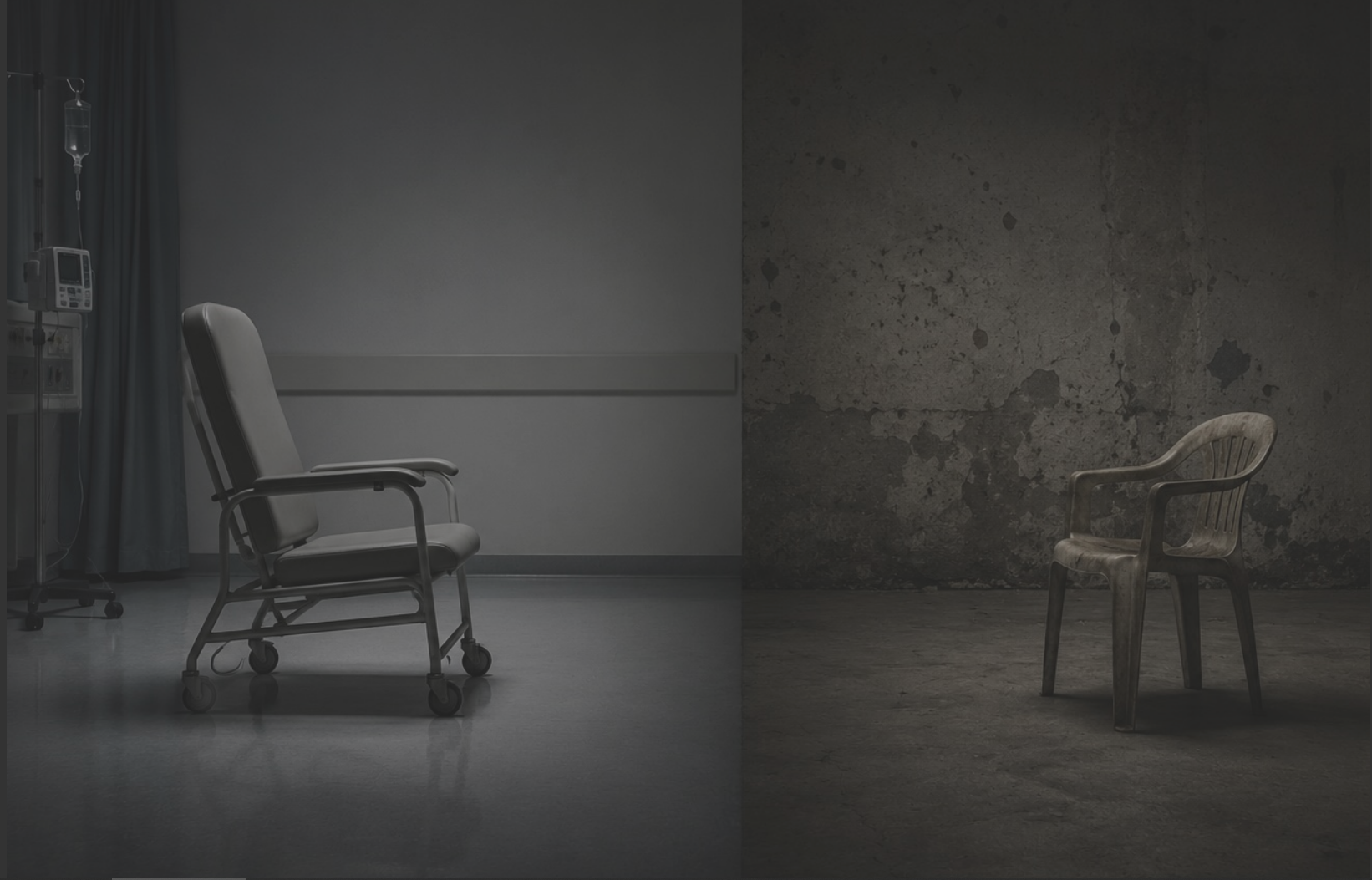
Imagine that the connection is real.
Not as an idea, not as art, but as reality. One person has supported another person's life for many years.
Schooling, food, healthcare, a future. Years later, a new situation arises, an organ becomes necessary for survival.
Not in ten years, not in theory, now.
And suddenly, a question emerges:
Who actually owes whom life? Does the recipient owe the donor's sacrifice? Or does the donor owe the support that made another life possible?
Is it solidarity? is it love? is it debt? is it power?
Or is it simply another expression of the global inequality that already connects us?
BIOBRIDGE offers no answers.
The project merely insists that the question exists. For perhaps the most uncomfortable thing is not the idea of organ trade.
Maybe it is the realization that our lives are already woven together with the deprivation of others long before we choose to acknowledge it.
No one sells an organ for fun. No one buys an organ without a reason. Behind every transaction is a person trying to survive.
Would you enter the market if you believed it could save your life?
BIOBRIDGE is an artwork. It does not buy or sell human organs. Submitted testimonies document attitudes and social conditions.
Would you buy? Would you sell?
By submitting your profile you accept your data being anonymously treated in the BIOBRIDGE art project.
Country: Denmark
Testimony: Healthy young man 42 years old.
Country: Denmark
Testimony: I would liked donate the money to the Danish International aid organization, 10forty. They help Armenian refuges from Nagorno-Karabakh.
Country: Denmark
Testimony: I was born with various heartdiseases. They were fixed by surgery and the insertion of a pigs heart palpitations. 30 years later, in connection with a pregnancy, I developed Heart Failure. In worst case scenario, I can suddenly need a heart with short notice.
Country: Denmark
Testimony: Concerns for another person